
Building a dock on Galveston Bay or along the Bolivar Peninsula requires a contractor who understands coastal water conditions, tidal fluctuation, and the specific permitting requirements for waterfront construction in Texas. We design and build boat docks, fishing piers, and canal structures engineered to last in the Gulf Coast environment.
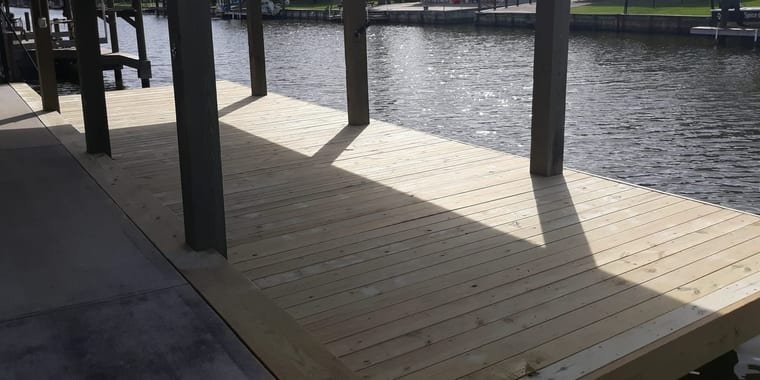
Every dock we build is designed around the specific conditions of your waterfront — water depth, tidal range, wave exposure, vessel size, and local setback requirements. A dock can need approval from the U.S. Army Corps of Engineers, the Texas General Land Office or Galveston County, depending on where it is and how big it is. We confirm what yours needs before work begins.
What We Build
- Fixed boat docks on pilings driven to appropriate depth for local soil conditions
- Floating docks for properties with significant tidal fluctuation
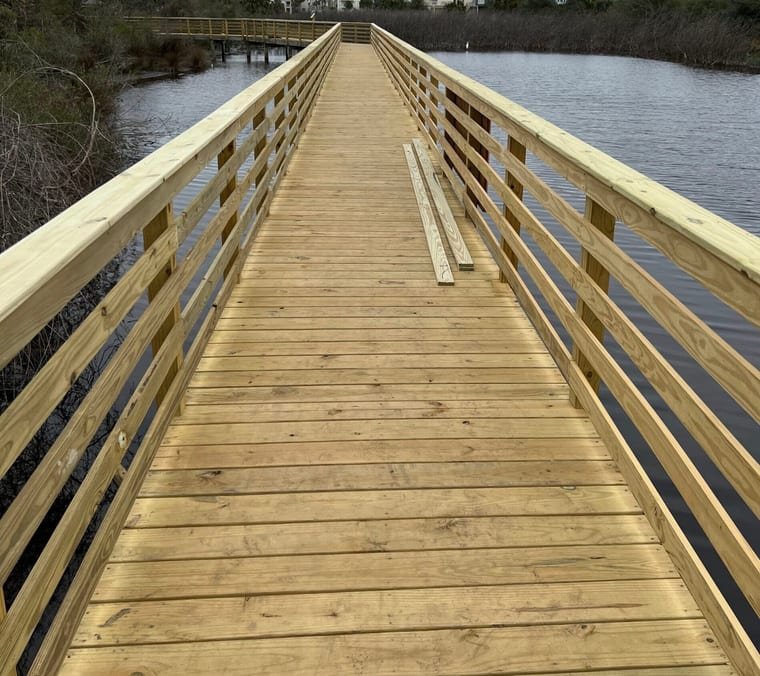
- Fishing piers and recreational platforms for bay and Gulf-front properties
- Canal dock structures for Bolivar Peninsula and Galveston Island waterway properties
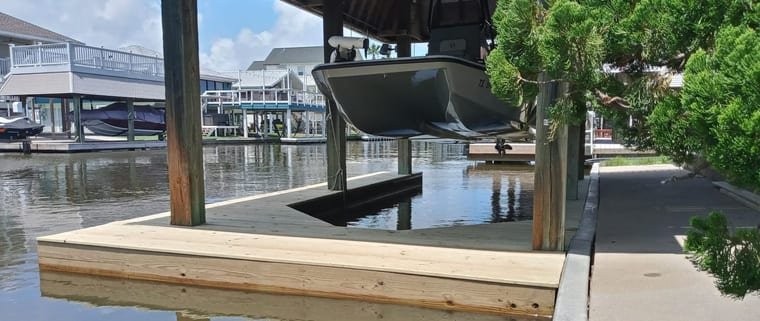
- Boat lift and davit installations
- Storm damage repair and dock replacement for hurricane-damaged structures
Built for Gulf Coast Conditions
Every structure we build is engineered for the Gulf Coast environment — corrosion-resistant hardware, materials rated for coastal exposure, proper anchoring for Gulf winds, construction to Texas windstorm code with engineer inspection arranged where TWIA certification is required, and the permits your project needs confirmed before work begins.
Where We Build Docks, and What Each Place Requires
A dock answers to the water it sits on and to whoever issues permits there. Those are different in each of the places we build them:
- Galveston’s West End: bay-side lots along West Bay. Jamaica Beach has its own building department; the rest of the West End is inside the City of Galveston.
- Tiki Island: a village built in the 1960s by digging canals, with homes mainly on the waterfront. Permits go through the Village of Tiki Island.
- Bayou Vista: waterfront homes on dredged canals that lead to Galveston Bay and the Gulf. The city handles permits inside its limits; Galveston County handles the unincorporated area it calls Old Bayou Vista.
- Bolivar Peninsula: bay-side lots on East Bay. Every community on the peninsula is unincorporated, so building goes through Galveston County.
On a canal lot, the bulkhead decides more than people expect: where pilings can go, how the dock ties in, and whether the bulkhead needs work first. We look at it, and at the water depth, before we plan the dock.
Frequently Asked Questions
Do I need a permit to build a dock in Galveston County?
Dock construction in coastal Texas typically requires coordination with multiple agencies including the U.S. Army Corps of Engineers, the Texas General Land Office, and Galveston County. Requirements depend on your specific waterfront location, the size of the structure, and the water body involved. We confirm what your dock needs before work begins.
What is the difference between a fixed dock and a floating dock?
A fixed dock is built on pilings and stays at a constant height — best for locations with minimal tidal fluctuation. A floating dock rises and falls with the water level, making it ideal for areas with significant tide swings. We assess your specific waterfront conditions and recommend the right system for your site.
Can you repair a dock damaged by a hurricane or storm surge?
Yes. We repair storm-damaged docks along the Bolivar Peninsula and Galveston Island. We assess structural damage, determine what can be repaired versus replaced, and rebuild to current code standards — which often results in a stronger structure than the original.
How deep do dock pilings need to be?
Piling depth depends on soil conditions, water depth, wave exposure, and the structural loads the dock will carry. We do not use a one-size number — every site is assessed individually to determine appropriate piling depth and diameter for your specific conditions.